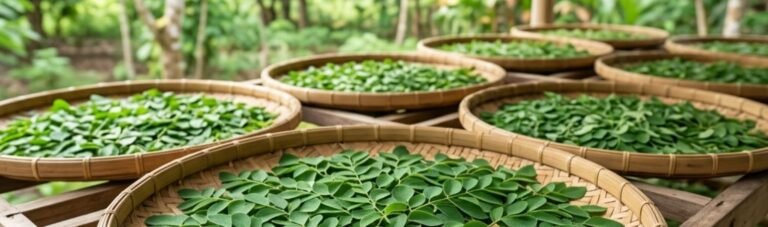

Moringa vs spinach is a useful nutritional comparison because both are nutrient-rich leafy greens, but they offer different combinations of vitamins, minerals and plant compounds. Moringa (Moringa oleifera) is valued for its protein, calcium, iron and antioxidant content, while spinach (Spinacia oleracea) is particularly recognised for vitamin K, folate, lutein and zeaxanthin.
Neither vegetable is universally healthier than the other. The better choice depends on the nutrients you want to include in your diet, the quantity consumed and how the leaves are prepared. Understanding their nutritional differences, nutrient absorption and food applications can help you make a more informed dietary choice.
Moringa vs Spinach: Nutritional Comparison
| Nutrient | Fresh moringa leaves | Raw spinach |
|---|---|---|
| Calories | 80 kcal | 23 kcal |
| Protein | 8.1 g | 2.86 g |
| Dietary fibre | 5.1 g | 2.2 g |
| Calcium | 311 mg | 99 mg |
| Iron | 4.6 mg | 2.71 mg |
| Vitamin C | Varies by source | 28.1 mg |
| Vitamin K | Data varies | Approximately 483 µg |
| Folate | Data varies | Approximately 194 µg |
Sources: World Agroforestry Priority Food Tree and Crop Food Composition Database,
An important distinction is that dried moringa leaves and commercial moringa powder contain less moisture than fresh leaves. Consequently, their nutrients appear more concentrated per 100 g. A 100 g comparison between dried moringa powder and fresh spinach would therefore be misleading for ordinary dietary use. Serving size and preparation should always be considered when evaluating nutritional value.
Health Benefits of Moringa and Spinach
Health Benefits of Moringa
Moringa leaves contain several nutrients and naturally occurring phytochemicals, including flavonoids, carotenoids and phenolic compounds. Quercetin and chlorogenic acid are among the plant compounds investigated for their antioxidant properties. These compounds may help protect cells against oxidative stress, although laboratory findings should not be interpreted as proof of disease prevention in humans.
Moringa also supplies protein, calcium, iron and beta-carotene, which contributes to vitamin A intake. These nutrients support normal muscle function, bone maintenance, oxygen transport and vision. Fresh leaves and moringa powder can therefore contribute to a varied diet, but moringa should not be considered a replacement for medical treatment or a guaranteed solution for specific health conditions. PubMed Central (PMC)+2
Health Benefits of Spinach
Spinach is particularly valuable for its vitamin K, folate and carotenoid content. Vitamin K contributes to normal blood clotting and bone metabolism, while folate supports DNA synthesis and normal cell division. Spinach also contains lutein and zeaxanthin, two carotenoids associated with maintaining eye health.
Its vitamin C content contributes to normal immune function and collagen formation. Additionally, spinach contains dietary nitrates, which have been studied for their potential role in supporting healthy blood vessel function. Including spinach in a balanced diet provides several essential nutrients without adding many calories.
Nutrient Absorption: Iron, Calcium and Oxalates
Nutrient content and nutrient absorption are two different aspects of food quality. Both moringa and spinach contain non-heme iron, the type of iron naturally found in plant foods. The body does not absorb all the iron present in leafy vegetables, and absorption can be influenced by other dietary compounds. Consuming vitamin C-rich foods alongside plant-based iron sources can improve non-heme iron absorption.
Spinach also contains oxalates, which bind minerals and significantly reduce the amount of calcium the body can absorb. Moringa contains antinutritional compounds, including phytates and oxalates, which can also influence mineral availability. Therefore, the mineral values in a nutritional table should not be confused with the amounts the body actually absorbs.
Moringa Powder vs Fresh Spinach: Which Is More Convenient?
Moringa powder and fresh spinach have different advantages in everyday food preparation. Moringa powder is made by drying and grinding moringa leaves, which reduces moisture and concentrates several nutrients by weight. It can be added to smoothies, soups, juices, sauces and nutritional blends in small quantities. However, drying and storage can reduce heat-sensitive nutrients, particularly vitamin C, depending on processing conditions.
Fresh spinach offers greater culinary versatility and can be used in salads, sandwiches, curries and cooked vegetable dishes. Moringa powder is convenient for people who prefer a shelf-stable leafy-green ingredient, while fresh spinach works well as a regular vegetable in meals. When purchasing moringa powder, consider its colour, aroma, texture, packaging, storage conditions and ingredient purity.
Moringa vs Spinach: Which One Should You Choose?
The choice depends on your nutritional priorities rather than a universal definition of which vegetable is healthier. Moringa is worth considering when you want to include a leafy ingredient that provides protein, calcium, iron and various plant compounds. Spinach is particularly useful for increasing dietary intake of vitamin K, folate and carotenoids. People who are concerned about calcium oxalate kidney stones may also need to pay attention to spinach consumption and discuss appropriate dietary choices with a healthcare professional.
Both vegetables can be included in the same diet through different meals and recipes. Combining them provides nutritional variety without relying on one leafy green as the sole source of essential nutrients. Ultimately, a balanced diet containing different vegetables, fruits, pulses, whole grains and other nutrient-rich foods is more beneficial than depending on moringa or spinach alone.
FAQs
Is moringa healthier than spinach?
Neither is universally healthier. Moringa provides notable amounts of protein, calcium and iron, while spinach is particularly rich in vitamin K, folate and carotenoids. Their nutritional benefits complement each other.
Which contains more iron, moringa or spinach?
Published food-composition data generally show that fresh moringa leaves contain more iron per 100 g than raw spinach. However, both provide non-heme iron, and the actual amount absorbed depends on dietary factors and mineral bioavailability.
Does moringa contain more calcium than spinach?
Fresh moringa leaves generally contain more calcium per 100 g than raw spinach. However, spinach contains oxalates that substantially reduce calcium absorption, so total calcium content does not represent the amount available to the body.
Can I consume moringa and spinach together?
Yes. Moringa and spinach can be consumed together in smoothies, soups, curries and other meals. Combining different leafy greens helps diversify nutrient intake and adds variety to everyday meals.
Can moringa powder replace fresh spinach?
Moringa powder can complement fresh spinach but is not a complete nutritional replacement. Spinach provides vitamin K, folate and lutein, while moringa offers a different combination of nutrients and plant compounds. Including both in a varied diet is a practical approach.