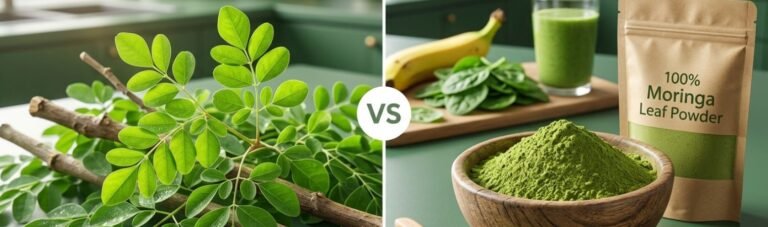
So, should you take moringa in the morning or at night?
Both options work well.
Morning may be ideal if you enjoy a healthy breakfast or morning smoothie, while evening may fit better if dinner is your main meal.
Instead of chasing the perfect timing, focus on consistent intake, balanced nutrition, and building a sustainable routine. That’s what makes the biggest difference over time.
If you’ve recently started using moringa powder, you might be wondering: Should I take moringa in the morning or at night?
The simple answer is that there isn’t one perfect time for everyone. Moringa can fit into your routine either in the morning or evening. What matters most is taking it consistently as part of a daily supplement routine, balanced nutrition plan, and healthy lifestyle.
Let’s explore the differences with Meerico so you can decide which timing works best for your schedule.
Understanding the Best Time to Take Moringa
Moringa, scientifically known as Moringa oleifera, is often described as a superfood, functional food, and plant-based food because of its naturally occurring nutrients. Moringa leaf powder contains vitamins, minerals, fiber, plant protein, polyphenols, chlorophyll, and other naturally occurring plant compounds.
Whether you enjoy moringa as a morning smoothie, stir it into soup, or mix it with water, the overall nutritional value remains the same.
The ideal timing depends on:
- Your meal timing
- Your personal routine
- Your ability to take it consistently every day
For most people, consistency is far more important than choosing the “perfect” hour.
Benefits of Taking Moringa in the Morning
Morning is one of the most popular times because moringa fits naturally into breakfast.
Supports Your Wellness Routine
Adding moringa to your breakfast creates a reliable wellness routine. Whether you prepare oatmeal, yogurt, or a smoothie, it’s an easy habit to maintain.
Many people enjoy starting their day with whole-food nutrition instead of relying solely on processed foods.
Easy Ways to Enjoy It
You can easily blend moringa into:
Smoothies
Fruit juice
Yogurt
Oatmeal
Herbal tea
Protein shakes
Its fine powder texture makes it easy to blend into everyday recipes.
Don’t forget to drink enough hydration throughout the day when consuming powdered foods.
Benefits of Taking Moringa at Night
Evenings can be equally convenient if dinner is your most consistent meal.
Fits Naturally Into Dinner
You can add moringa leaf powder to:
- Soups
- Dal
- Vegetable curries
- Warm herbal drinks
This makes it simple to maintain a consistent daily serving.
Consider Digestive Comfort
Everyone responds differently to foods.
If you’re new to moringa, begin with the recommended serving listed on the product label and observe your digestive comfort. Some people prefer taking it with meals for better digestive tolerance, while others enjoy it between meals.
Morning vs Night: Which Is Better?
There isn’t a universal winner.
Morning may suit people who enjoy smoothies or have a structured breakfast.
Night may work better for those with busy mornings but consistent dinners.
Rather than focusing on bioavailability or the exact clock time, your biggest priority should be creating a routine you’ll actually maintain.
Regular consumption supports better long-term consistency than occasionally taking larger amounts.
FAQs
Can I take moringa on an empty stomach?
Many people choose to take moringa with food as part of a meal or snack. If you’re trying it for the first time, taking it with food may be a comfortable option.
Can I take moringa twice a day?
Some products may suggest divided servings, while others recommend a single daily serving. Always follow the serving instructions provided on the product label.
Is morning better than night for moringa?
Neither time is universally better. The ideal choice depends on your daily routine and personal preference.
What is the easiest way to consume moringa powder?
You can mix moringa powder into smoothies, juices, yogurt, soups, oatmeal, herbal tea, or other everyday recipes.
How long should I take moringa?
Moringa is commonly used as part of a regular diet, find out our Moring FAQ. Follow the product’s recommended serving instructions and consult a healthcare professional if you have specific medical conditions, are pregnant, breastfeeding, or are taking prescription medications.