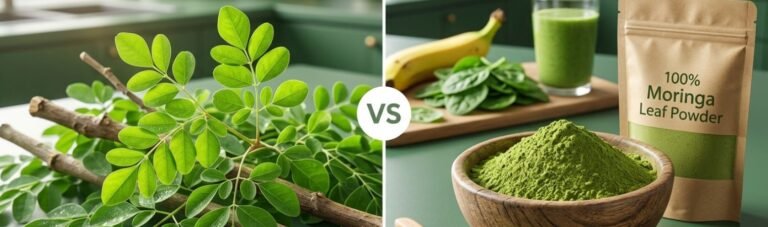
When purchasing moringa powder, laboratory reports and certifications provide valuable assurance—but there are also several visible and sensory characteristics that can help you assess its quality. While these indicators don’t replace professional testing, they offer practical clues about how the moringa leaves were harvested, processed, and stored.
High-quality moringa powder typically has a vibrant appearance, a fresh herbal aroma, a smooth texture, and a clean, earthy taste. Significant variations in these characteristics may indicate differences in processing methods, storage conditions, or raw material quality.
Let’s explore the four key attributes to examine before making a purchase.
Why Quality Matters?
Choosing high-quality moringa powder isn’t just about getting a better-looking product. It affects nutritional consistency, food safety, shelf life, and overall user experience.
Whether you’re purchasing a small pack for personal use or sourcing bulk quantities for manufacturing, investing in a well-produced, properly tested, and responsibly packaged product helps ensure you receive moringa powder that meets both quality and safety expectations.
As you continue through this guide, we will explore how visible characteristics such as color, aroma, texture, and taste can provide additional clues about the quality of moringa powder before you make a purchase.
How to Evaluate Moringa Powder by Color, Aroma, Texture & Taste | Complete Buying Guide
1. Color: The First Indicator of Quality
Color is often the easiest and quickest way to evaluate moringa powder.
Premium moringa powder usually has a bright to deep natural green color, reflecting careful harvesting and gentle drying techniques that help preserve the leaf’s natural pigments.
What Bright Green Powder Indicates
A vibrant green color generally suggests:
- Fresh, healthy moringa leaves
- Proper harvesting practices
- Controlled drying temperatures
- Minimal exposure to excessive heat
- Good storage conditions
Although color alone cannot guarantee quality, it is often a positive sign when combined with other quality indicators.
What Brown or Dull Powder May Indicate
A brown, yellowish, or faded appearance may result from factors such as:
- Overheating during drying
- Oxidation during storage
- Prolonged exposure to sunlight
- Older raw materials
- Excessive storage time
- Poor packaging
These factors may affect both appearance and overall product quality.
Buyer Tip
Bright green doesn’t automatically mean “best,” but noticeably dull or brown powder deserves closer evaluation, especially if accompanied by an unusual smell or poor packaging.
Color Comparison
| Color | Possible Interpretation |
| Bright Green | Fresh leaves and well-controlled processing |
| Deep Natural Green | High-quality drying and proper storage |
| Olive Green | May still be acceptable depending on processing |
| Brownish Green | Possible oxidation or excessive heat exposure |
| Brown or Yellow | May indicate aging, poor drying, or improper storage |
2. Aroma: Freshness You Can Smell
The aroma of moringa powder provides another useful indication of freshness.
High-quality moringa powder generally has:
- A fresh herbal scent
- A grassy aroma
- Mild earthy notes
- A clean, natural smell
The aroma should never feel overpowering or artificial.
Warning Signs
Be cautious if the powder has:
- A burnt smell
- Musty odor
- Moldy aroma
- Chemical-like scent
- No noticeable aroma at all
These characteristics may indicate improper drying, poor storage conditions, or product deterioration.
3. Texture: Fine and Consistent Matters
Texture is especially important for both consumers and manufacturers.
Premium moringa powder is usually:
- Finely milled
- Smooth to the touch
- Uniform in appearance
- Free from large stems or fibrous particles
A consistent particle size improves:
- Mixing in beverages
- Capsule filling
- Product formulation
- Consumer experience
Signs of Poor Processing
You may notice:
- Large leaf fragments
- Hard particles
- Excessive stems
- Uneven grinding
- Visible impurities
These issues can indicate lower processing standards or inadequate quality control.
4. Taste: Naturally Earthy, Not Bitter
Moringa has a distinctive flavor that is often described as:
- Earthy
- Mildly grassy
- Slightly vegetal
- Similar to spinach or matcha
Because moringa is a leafy green, a subtle bitterness is normal. However, the taste should remain balanced and pleasant when used in recommended amounts.
Taste That May Suggest Lower Quality
An excessively:
- Bitter
- Burnt
- Sour
- Stale
- Metallic
Flavor may indicate processing or storage problems.
Many people blend moringa powder with fruits, yogurt, or smoothies to create a more balanced taste while maintaining its nutritional value.
Visual Inspection Before Buying
If you’re purchasing moringa powder in-store or receiving a product sample from a supplier, take a few moments to inspect it carefully.
Look For | Avoid products that show: |
|---|---|
Quick Quality Evaluation Checklist
| Quality Indicator | High-Quality Moringa Powder |
| Color | Bright to deep natural green |
| Aroma | Fresh, herbal, earthy |
| Texture | Fine, smooth, and uniform |
| Taste | Mildly earthy with slight natural bitterness |
| Moisture | Dry and free-flowing |
| Packaging | Airtight, food-grade, properly labeled |
| Documentation | COA and quality testing available |
Expert Insight
Although visual inspection is an excellent starting point, the best purchasing decisions combine sensory evaluation with verified quality documentation. A product that looks excellent but lacks traceability or testing may not meet the standards required for food manufacturing or export.
For consumers, checking color, aroma, and packaging can help identify better products. For businesses, laboratory testing, certifications, and supplier reliability should always be part of the evaluation process.
What Is Organic Moringa Powder?
Organic moringa powder is produced from moringa trees grown according to certified organic farming standards. These standards generally prohibit the use of synthetic pesticides, herbicides, genetically modified organisms (GMOs), and most synthetic fertilizers.
To be sold as certified organic in many international markets, the product typically needs to be verified by an accredited certification body under recognized organic standards, such as USDA Organic or the EU Organic Regulation.
Organic farming focuses on practices such as:
- Maintaining soil health through natural methods
- Using compost and organic fertilizers
- Encouraging biodiversity
- Responsible pest management
- Sustainable agricultural practices
For consumers and businesses that prioritize environmentally conscious sourcing, certified organic moringa powder is often the preferred option.
What Is Conventional Moringa Powder?
Conventional moringa powder is produced using standard agricultural practices, which may allow approved fertilizers and crop protection products depending on local regulations.
This does not automatically mean the product is of lower quality. Many reputable conventional farms follow strict quality control measures, hygienic processing standards, and food safety protocols to produce safe, high-quality moringa powder.
The final quality still depends on factors such as:
- Leaf selection
- Harvest timing
- Drying method
- Processing conditions
- Laboratory testing
- Packaging
- Storage
A well-managed conventional product can often outperform a poorly processed organic product in terms of freshness, consistency, and overall quality.
Key Differences Between Organic and Conventional Moringa Powder
| Feature | Organic Moringa Powder | Conventional Moringa Powder |
| Farming Practices | Certified organic methods | Standard agricultural practices |
| Synthetic Pesticides | Generally prohibited | May be used in accordance with local regulations |
| Certification | Requires accredited organic certification | Organic certification not required |
| Traceability | Usually well documented | Varies by manufacturer |
| Price | Typically higher | Often more economical |
| Target Markets | Organic retailers, health brands, premium consumers | General food, supplement, and industrial markets |
Does Organic Mean More Nutritious?
One of the most common misconceptions is that organic moringa powder is always more nutritious than conventional moringa powder.
Current scientific evidence does not consistently support this assumption. Nutritional quality is influenced by many factors, including:
- Soil quality
- Climate
- Plant variety
- Leaf maturity
- Harvest timing
- Drying temperature
- Processing methods
- Storage conditions
For example, a carefully processed conventional moringa powder may retain more nutrients than an organic product that has been exposed to excessive heat or poor storage conditions.
Rather than focusing solely on the word “organic,” buyers should evaluate the product’s overall quality.
When Should You Choose Organic Moringa Powder?
Organic moringa powder may be the better option if you:
- Prefer certified organic products.
- Sell products into organic retail markets.
- Manufacture premium health or wellness products.
- Need to meet organic certification requirements for export.
- Prioritize environmentally sustainable farming practices.
Many natural food stores, specialty retailers, and premium supplement brands specifically request certified organic ingredients.
When Is Conventional Moringa Powder a Good Choice?
Conventional moringa powder may be suitable when:
- Organic certification is not required.
- Budget is an important consideration.
- The supplier follows robust food safety and quality standards.
- Laboratory testing confirms product quality and safety.
- Consistent supply and availability are key priorities.
Many food manufacturers, nutraceutical companies, and industrial buyers successfully use high-quality conventional moringa powder in their formulations.
Questions to Ask Before Buying Organic Moringa Powder
Before choosing an organic product, consider asking your supplier:
- Is the product certified organic?
- Which certification body issued the certificate?
- Is the certification valid for my target market?
- Can you provide a current organic certificate?
- Is the product tested for pesticides and contaminants?
- How is traceability maintained throughout production?
Reliable suppliers should be able to provide clear documentation to support their claims.
Expert Recommendation
Whether you choose organic or conventional moringa powder, the most important factors are quality, transparency, and supplier credibility.
Instead of selecting a product based solely on marketing claims, evaluate:
- Farming practices
- Processing methods
- Laboratory testing
- Food safety systems
- Certifications (when applicable)
- Packaging quality
- Product traceability
- Manufacturer reputation
A trusted supplier that consistently delivers safe, well-processed, and properly tested moringa powder is often a better long-term partner than one relying only on certification labels.