With the growing popularity of plant-based nutrition, moringa powder has become one of the most sought-after superfoods in the global health and wellness industry. From dietary supplements and herbal teas to functional foods and nutritional beverages, moringa is now used by consumers, food manufacturers, nutraceutical companies, and cosmetic brands across the world. However, not all moringa powder is created equal.
The quality of moringa powder can vary significantly depending on where it is grown, how the leaves are harvested, the drying method used, processing standards, packaging, and storage conditions. While premium-quality moringa powder retains its vibrant green color, natural aroma, and rich nutritional profile, lower-quality products may lose valuable nutrients due to poor handling, excessive heat, contamination, or prolonged storage.
Choosing high-quality moringa powder is important whether you’re purchasing it for personal wellness, product manufacturing, wholesale distribution, or international trade. High-quality powder not only delivers better nutritional value but also ensures food safety, product consistency, and compliance with industry standards. For businesses, sourcing from a reliable manufacturer can improve product quality, strengthen customer trust, and support long-term success.
Unfortunately, the increasing demand for moringa has also led to the availability of products that vary widely in purity and quality. Some powders may be produced from over-mature leaves, dried under unsuitable conditions, or stored improperly, affecting their color, flavor, and nutritional composition. Others may lack proper quality testing, certifications, or traceability, making it difficult for buyers to assess their reliability.
So, how do you choose high-quality moringa powder? The answer lies in understanding the factors that influence quality—from cultivation and harvesting practices to drying techniques, laboratory testing, certifications, packaging, and supplier credibility. Whether you’re a health-conscious consumer looking for the best moringa powder or a business sourcing bulk quantities for commercial use, knowing what to look for can help you make informed purchasing decisions.
In this comprehensive buyer’s guide, we will explore the key characteristics of premium moringa powder, explain how to identify high-quality products, compare processing methods, discuss important food safety certifications, and share practical tips for selecting a trustworthy supplier. By the end of this guide, you’ll have the knowledge needed to confidently evaluate moringa powder and choose a product that meets your quality expectations.
What Makes Moringa Powder High Quality? How to Choose High-Quality Moringa Powder
Not all moringa powder offers the same level of quality, nutrition, or safety. While many products may appear similar on the surface, the final quality depends on every stage of production—from cultivation and harvesting to drying, processing, packaging, and storage.
High-quality moringa powder isn’t determined by a single factor such as color or price. Instead, it’s the result of carefully controlled agricultural and manufacturing practices that preserve the plant’s natural nutrients while maintaining food safety and product consistency.
Whether you’re buying moringa powder for personal use or sourcing it for commercial applications, understanding these quality indicators will help you make informed purchasing decisions.
Source of the Moringa Leaves
Every premium product starts with quality raw materials. The nutritional value and overall quality of moringa powder largely depend on where and how the trees are grown.
Several factors influence leaf quality, including:
Climate and temperature
Soil fertility
Rainfall patterns
Irrigation practices
Harvesting methods
Farming techniques
Regions with warm climates, abundant sunlight, and well-drained soil generally produce healthier moringa trees with vigorous leaf growth. India, particularly states such as Tamil Nadu, Karnataka, Andhra Pradesh, Telangana, and Gujarat, is widely recognized for cultivating high-quality moringa due to favorable growing conditions and extensive agricultural experience.
Harvesting at the Right Stage
The maturity of the leaves plays a significant role in determining the quality of moringa powder.
Leaves harvested too early may have lower yields, while over-mature leaves can become tougher and may not deliver the same freshness or sensory qualities.
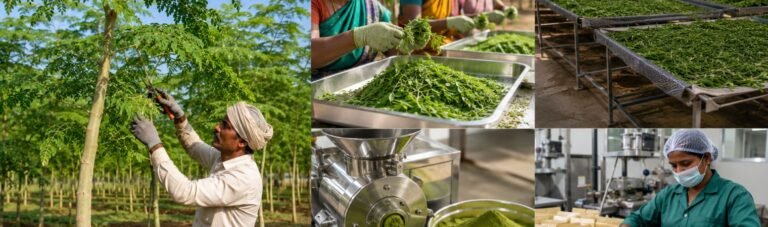
Experienced growers typically harvest mature, healthy leaves at the optimal stage to achieve the best balance of:
Nutritional value
Natural color
Aroma
Texture
Processing efficiency
Proper harvesting techniques also help minimize physical damage to the leaves before processing.
Expert Tip
High-quality moringa powder begins with careful harvesting. Even the best drying technology cannot compensate for poor-quality raw leaves.
Clean and Hygienic Cultivation Practices
Food safety starts in the field.
Reputable producers follow good agricultural practices (GAP) to reduce contamination risks during cultivation and harvesting.
Important practices include:
Clean irrigation water
Responsible fertilizer use
Proper pest management
Hygienic harvesting methods
Protection from dust and contaminants
Careful handling during transportation
These measures help ensure that the leaves reach the processing facility in the best possible condition.
Proper Cleaning Before Processing
Freshly harvested moringa leaves naturally contain dust, soil particles, and other field residues. Before drying, they should undergo careful cleaning using hygienic procedures.
Proper cleaning helps:
Remove foreign matter
Improve food safety
Reduce microbial contamination
Produce cleaner, higher-quality powder
This step is particularly important for products intended for export or use in dietary supplements and functional foods.
Gentle Drying to Preserve Nutrients
Drying is one of the most critical stages in moringa powder production.
The goal is to remove moisture while preserving the leaf’s natural color, aroma, and nutritional composition.
Excessive heat may affect certain heat-sensitive nutrients and alter the powder’s appearance. Controlled drying methods are therefore preferred to help retain quality.
Common drying methods include:
Shade drying
Controlled hot-air drying
Solar drying
Freeze drying (less common due to higher cost)
We will compare these methods in detail later in this guide.
Fine Grinding and Uniform Particle Size
After drying, the leaves are milled into powder.
High-quality moringa powder should have:
A fine, consistent texture
Minimal fibrous material
Uniform particle size
Smooth appearance
A consistent grind improves mixing, dissolution, and ease of use in products such as smoothies, capsules, beverages, and dietary supplements.
Low Moisture Content
Moisture plays an important role in maintaining product stability.
Excess moisture may increase the risk of:
Mold growth
Yeast development
Bacterial contamination
Clumping
Reduced shelf life
Maintaining appropriate moisture levels helps preserve freshness and supports product quality during storage and transportation.
For export-quality moringa powder, manufacturers typically monitor moisture as part of their quality control process.
Minimal Processing
High-quality moringa powder should undergo processing that preserves the natural characteristics of the leaves without unnecessary additives.
Ideally, the product should be:
100% pure moringa leaves
Free from artificial colors
Free from preservatives (unless specifically required for a formulation)
Free from unnecessary fillers
Free from synthetic additives
Always review the ingredient list to confirm the product contains only moringa leaf powder if you’re seeking a pure product.
Proper Packaging
Even the highest-quality moringa powder can deteriorate if packaged incorrectly.
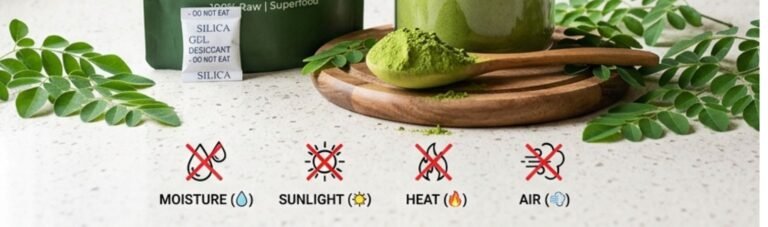
Effective packaging helps protect the powder from:
Moisture
Oxygen
Direct sunlight
Dust
Cross-contamination
Common packaging options include:
Food-grade pouches
Multi-layer laminated bags
Vacuum-sealed packs
Bulk export bags with inner liners
Well-designed packaging not only preserves product quality but also extends shelf life.
Quality Testing and Traceability
Reliable manufacturers implement quality control measures throughout production.
Depending on the intended market, testing may include:
Microbiological analysis
Heavy metal testing
Pesticide residue screening
Moisture analysis
Product identity verification
Traceability is equally important.
Batch numbers, production records, and proper documentation enable manufacturers to track products throughout the supply chain and respond effectively if quality issues arise.
Key Characteristics of High-Quality Moringa Powder
Quality Factor | What to Look For |
|---|---|
Raw Material | Healthy, mature moringa leaves |
Cultivation | Clean and well-managed farming practices |
Harvesting | Leaves collected at the appropriate maturity stage |
Drying | Controlled drying to help preserve quality |
Color | Vibrant natural green |
Aroma | Fresh, herbal scent |
Texture | Fine and uniform powder |
Purity | 100% moringa leaf powder with no unnecessary additives |
Moisture | Properly controlled for product stability |
Packaging | Food-grade, airtight, moisture-resistant packaging |
Testing | Quality testing and product traceability |
FAQ
How can I identify high-quality moringa powder?
High-quality moringa powder typically has a vibrant green color, a fresh herbal aroma, a fine and uniform texture, and is made from carefully harvested moringa leaves. It’s also important to choose products that are manufactured under hygienic conditions and supported by quality testing or certifications where applicable.
What color should premium moringa powder be?
Premium moringa powder is usually bright to deep natural green. A dull brown or yellowish color may indicate excessive heat during drying, oxidation, poor storage conditions, or older raw materials. While color is a useful indicator, it should be considered alongside factors such as aroma, texture, processing methods, and supplier credibility.
Is organic moringa powder always better than conventional moringa powder?
Not necessarily. Organic moringa powder follows certified organic farming practices, but overall quality also depends on harvesting, drying, processing, storage, and quality control. A well-produced conventional product can sometimes outperform a poorly processed organic product. Buyers should evaluate the complete production process rather than relying solely on the organic label.
Which drying method is best for preserving moringa powder quality?
Controlled hot-air drying and carefully managed shade drying are commonly used to produce high-quality moringa powder. The ideal method depends on the manufacturer’s equipment and quality standards. The most important factor is maintaining appropriate drying conditions that help preserve the powder’s natural color, aroma, and nutritional profile.
How should moringa powder be stored?
Store moringa powder in an airtight, food-grade container in a cool, dry place away from direct sunlight, heat, and moisture. Proper storage helps maintain freshness, color, aroma, and overall quality throughout its shelf life.
What should I look for when choosing a moringa powder supplier?
A reliable supplier should provide clear product information, consistent quality, hygienic manufacturing practices, batch traceability, and, when applicable, laboratory testing reports or certifications. Businesses sourcing bulk quantities should also evaluate production capacity, packaging options, export experience, and customer support.
Can I buy moringa powder in bulk for commercial use?
Yes. Many manufacturers and exporters supply moringa powder in bulk for food manufacturers, nutraceutical companies, wholesalers, distributors, and private-label brands. Before placing a bulk order, it’s advisable to request product specifications, quality documentation, and samples for evaluation.
Does processing affect the quality of moringa powder?
Yes. Processing plays a crucial role in determining the final quality of moringa powder. Factors such as drying temperature, grinding methods, moisture control, and packaging can influence the product’s color, texture, aroma, shelf life, and nutritional characteristics.
Why is Indian moringa powder popular in international markets?
India is one of the world’s largest producers of moringa and offers favorable climatic conditions for cultivation. The country’s experience in farming, processing, and exporting moringa products has made Indian moringa powder a preferred choice for many global buyers seeking consistent quality and reliable supply.
Why is choosing the right moringa powder important?
Selecting high-quality moringa powder helps ensure better product consistency, food safety, freshness, and overall value. Whether you’re purchasing for personal use or commercial manufacturing, evaluating factors such as cultivation, processing, packaging, and supplier reliability can help you make a well-informed buying decision.