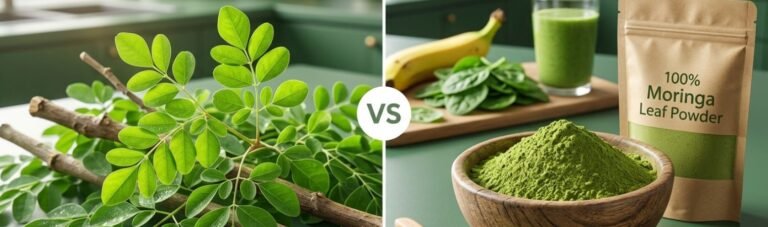
So, is moringa good for weight loss?
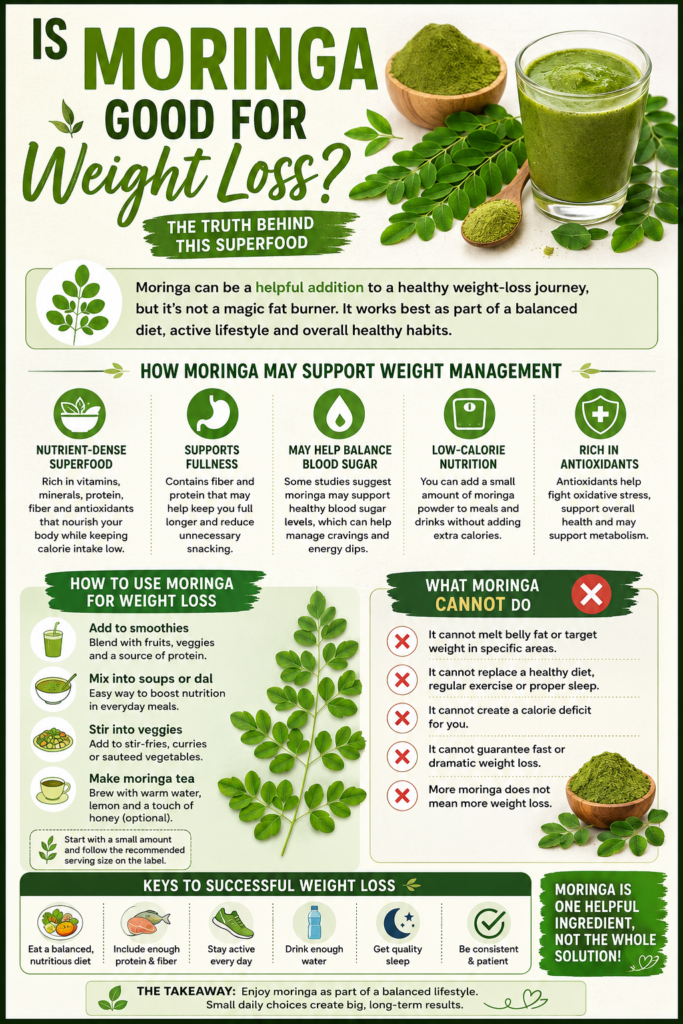
Moringa can be a useful addition to a balanced weight-management diet, but there isn’t a good reason to treat it as a standalone weight-loss solution or fat burner. Its value comes primarily from its nutritional profile, versatility and place within a healthy eating pattern.
If you’re trying to lose weight, focus on the fundamentals first: calorie balance, nutritious meals, protein, fiber, physical activity, sleep and consistency. Moringa can complement those habits, but it shouldn’t be expected to replace them.
In simple terms, don’t ask moringa to do all the work. Use it as one helpful ingredient in a much bigger strategy for healthy, sustainable weight management.
If you’re trying to lose weight, you’ve probably searched for foods or natural ingredients that could make the process a little easier. Moringa is one name that often appears in conversations about healthy eating, nutrition and weight management. But does moringa actually help you lose weight, or is it simply another ingredient surrounded by exaggerated claims?
The answer is more balanced than many headlines suggest.
Moringa can be included in a healthy weight-loss diet, but it isn’t a magic fat burner. Moringa leaves provide plant-based nutrients, dietary fiber, micronutrients and naturally occurring plant compounds, while moringa powder offers a convenient way to add leafy-green nutrition to everyday meals.
The important point is this: moringa may complement a weight-management lifestyle, but your overall diet, calorie intake, physical activity and consistency have a much greater influence on your results.
Is Moringa Good for Weight Loss?
Moringa should not be viewed as a food that directly melts body fat. Healthy weight loss is largely connected to energy balance—the relationship between the calories you consume and the energy your body uses.
When you consistently consume fewer calories than your body requires, you create a calorie deficit, which can lead to gradual weight loss over time.
So, where does moringa fit?
Moringa leaf powder can become part of a nutritious eating pattern. You can add a small amount to smoothies, soups, dal or other meals without completely changing what you already eat. That makes it a practical ingredient rather than a complicated addition to your routine.
However, simply taking moringa while continuing to consume excess calories is unlikely to produce meaningful weight-loss results.
Moringa Is a Nutrient-Dense Food, Not a Fat-Burning Supplement
One reason moringa attracts attention is its nutritional profile. Moringa leaves contain nutrients such as protein, dietary fiber, vitamins, minerals and other plant compounds.
These nutrients can contribute to an overall balanced diet.
But there’s an important distinction between being nutritious and being a weight-loss treatment.
A nutrient-dense food can support better food choices without directly causing fat loss. Think of your diet as a large puzzle. Calorie balance, meal quality, protein intake, fiber, exercise, sleep and eating habits are all pieces of that puzzle. Moringa is one small piece—not the entire solution.
How Moringa May Fit Into a Weight-Loss Diet
Moringa’s role in weight management becomes more useful when you look at the bigger dietary picture.
Moringa Can Add Nutrition Without Changing Your Entire Meal
One practical benefit of moringa powder is its versatility. You can add a small serving to foods and drinks that you already consume.
For example, moringa can be incorporated into a vegetable smoothie, dal, soup or savory dish. This makes it relatively easy to include leafy-green nutrition as part of your normal eating pattern.
However, don’t assume that adding moringa automatically makes a meal suitable for weight loss. Consider a smoothie containing moringa, sweetened yogurt, sugar, large quantities of fruit and calorie-dense nut butter. Although it con
The entire meal matters more than one ingredient.
Could Fiber and Protein Make a Difference?
When managing body weight, protein and dietary fiber are particularly useful parts of a balanced diet because they can contribute to satisfying meals.
Moringa provides some protein and fiber, but the amount you consume from a typical serving of powder may be relatively small. Therefore, it shouldn’t be treated as your primary source of either nutrient.
Instead, combine moringa with foods that naturally provide protein and fiber, such as pulses, beans, vegetables, whole grains, seeds, nuts and other protein-rich foods.
A balanced plate is much more valuable than relying on one “superfood.”
Moringa and Metabolic Health: What Does the Research Say?
Moringa is being studied for its potential relationship with areas such as blood glucose, glucose metabolism, antioxidant activity and metabolic health. Some research has produced interesting findings, but that doesn’t mean moringa has been proven to cause significant weight loss in humans.
This distinction is important.
Research involving laboratory models or preliminary studies can help scientists understand potential biological effects, but those findings should not automatically be interpreted as proof of a weight-loss benefit for people.
Therefore, it’s better to say that moringa is an interesting plant food being studied for several aspects of health, rather than claiming that it has a proven fat-burning effect.
If you come across a product promising dramatic weight loss simply because it contains moringa, approach the claim carefully. Realistic weight management is usually gradual rather than dramatic.
How to Use Moringa Powder for Weight Loss
If you enjoy moringa and want to include it in your diet, there’s no need to make things complicated.
Start With a Small Serving
If you’re new to moringa powder, start with a small amount and see how you like the flavor and how it fits into your meals.
Moringa has a distinctive earthy and slightly grassy taste, so using a modest serving can make it easier to incorporate into foods you already enjoy.
More isn’t necessarily better. The goal is to use moringa as part of your diet, not to consume excessive amounts in the hope of accelerating weight loss.
Choose Low-Calorie Ways to Consume Moringa
If your goal is weight management, pay attention to the ingredients you combine with moringa.
You might mix it into an unsweetened smoothie, add it to a vegetable-based meal or stir it into dal or soup. The idea is simple: use moringa to complement nutritious meals rather than adding unnecessary calories around it.
Your food choices throughout the day still matter far more than the particular time or method you use to consume moringa.
What Moringa Cannot Do for Weight Loss
Let’s clear up a few common misconceptions.
Moringa cannot specifically target belly fat. Your body does not allow individual foods to determine where fat disappears first. Changes in body composition are influenced by factors such as genetics, overall calorie balance, activity and individual physiology.
Moringa also cannot replace portion control, a balanced diet, regular exercise, adequate sleep or sustainable eating habits.
And taking a larger serving doesn’t mean you’ll lose weight faster.
If you’re serious about weight management, focus first on building meals around nutritious foods, maintaining a reasonable calorie intake and developing habits that you can actually continue for months—not just a few days.
Moringa, Exercise and Diet: The Bigger Picture
Successful weight management is rarely about finding one extraordinary ingredient. It’s more about creating a routine that works in real life.
A healthy eating pattern can provide the nutritional foundation. Walking, aerobic exercise and resistance training can increase physical activity and help support overall fitness. Adequate protein can help support muscle mass, while sleep and hydration are also important parts of a healthy lifestyle.
Moringa can fit somewhere within that routine.
For example, adding moringa powder to your morning meal while eating balanced foods throughout the day is very different from consuming moringa and expecting it to compensate for an otherwise unhealthy diet.
That’s the key distinction.
Moringa can be part of a weight-loss lifestyle, but it doesn’t create the lifestyle for you.
Is Moringa Worth Adding to Your Diet?
If you enjoy the flavor and want an easy way to include a leafy-green ingredient in your meals, moringa can certainly have a place in your diet.
But if your only reason for taking it is the expectation that it will burn fat, your expectations may be too high.
A better approach is to think about long-term weight management rather than quick weight loss. Build meals around vegetables, fruits, whole grains, pulses and other nutrient-rich foods. Include adequate protein and fiber, stay physically active and pay attention to portions.
Then, if you enjoy moringa, use it as an additional source of plant-based nutrition.
FAQs
Does moringa burn belly fat?
No. Moringa cannot specifically target belly fat. Losing body fat generally involves maintaining an appropriate calorie balance over time, along with nutritious food choices and regular physical activity.
Can I consume moringa powder every day for weight loss?
Moringa powder can be incorporated into a daily eating pattern, but it should not be treated as a dedicated weight-loss treatment. Start with a small serving if you’re new to it and follow the serving guidance provided on the product label.
What is the best time to take moringa for weight loss?
There is no established “best time” to consume moringa specifically for weight loss. You can include it at a convenient time of day. Your overall calorie intake, dietary pattern and consistency matter much more than timing.
How much moringa powder should I take for weight loss?
There is no universally established weight-loss dose of moringa powder. More moringa does not necessarily mean more weight loss. Start with a modest serving and follow the recommended serving size on the product you are using.
Can moringa replace a weight-loss diet?
No. Moringa should complement, not replace, a balanced diet. Sustainable weight management depends on your overall eating habits, calorie balance, physical activity, sleep and long-term consistency, rather than one particular food or ingredient.